
Therapy Approach
Play Therapy
A specialized approach for children that uses play as the primary language to process emotions, resolve trauma, and build coping skills.
Written by Krissy Cotten, MA, LPC | Reviewed June 2026
Educational content only — not a substitute for professional advice.
Play Therapy is a developmentally appropriate, evidence-based intervention for children. Because children often lack the cognitive and verbal skills to articulate complex emotions, we use play—their natural language—to help them communicate, heal, and grow in our Atascocita clinic.
What Play Therapy is
Adults talk out their problems; children play them out. Play Therapy provides a safe, specially equipped environment where a child can express their inner world through toys, art, and movement. We primarily utilize Child-Centered Play Therapy (CCPT), based on the principles of Virginia Axline. This non-directive approach trusts that the child has an innate capacity for self-healing when provided with the core conditions of empathy, unconditional positive regard, and genuine therapeutic presence. The therapist acts as a deeply attuned observer and facilitator, allowing the child to lead the play to process whatever issues are most pressing for them.
How it works in sessions
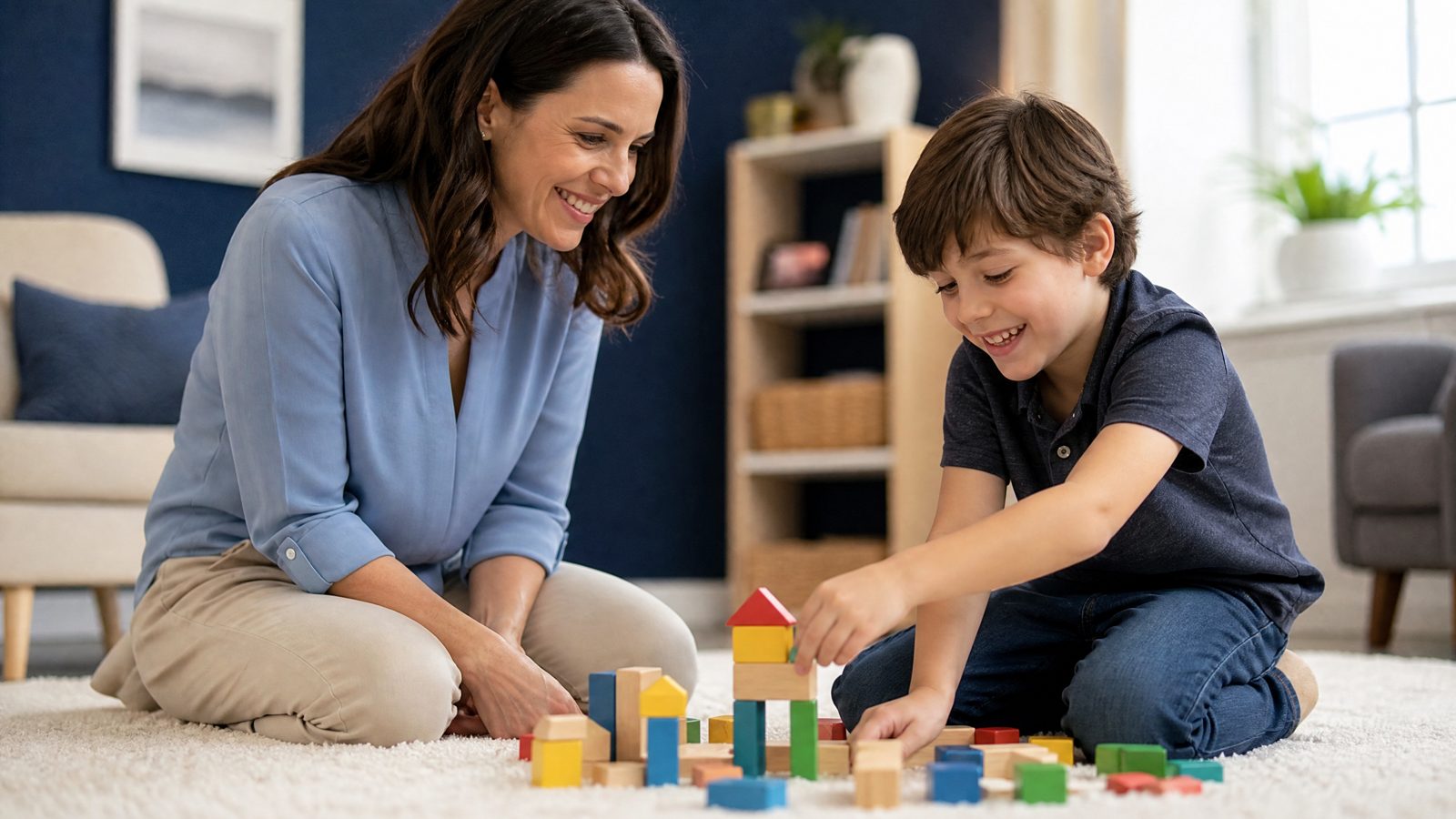
In the playroom, the child is presented with carefully selected categories of toys: real-life toys (dollhouses, cars), acting-out/aggressive toys (bop bags, toy soldiers), and creative/emotional release toys (sand, art supplies).
The therapist uses tracking—narrating the child's actions and reflecting their underlying feelings (e.g., "You are feeling really frustrated that the block won't fit"). This helps the child develop emotional vocabulary and feel deeply understood. A critical component is therapeutic limit setting (the A-C-T model: Acknowledge the feeling, Communicate the limit, Target an alternative). Limits are set not to punish, but to provide safety and teach self-regulation and responsibility.
What this approach can help with
Play Therapy is our primary modality for Children Therapy (typically ages 3 to 10). It is highly effective for processing major life transitions, making it essential for Divorce Counseling and Grief Counseling involving young children. We also use it to address behavioral issues, anxiety, and school refusal, and it is a critical component of treating childhood trauma and Sexual Abuse, allowing the child to safely externalize and process traumatic memories without forced verbalization.
What to expect
Play therapy is not just "playing around." It is a structured psychological intervention. Parents can expect regular consultations with the therapist to discuss themes emerging in the play, track behavioral progress at home, and learn skills to support the child. The child's behavior may sometimes temporarily worsen before it improves as they begin to process difficult emotions in the playroom. A typical course of treatment involves weekly sessions over several months to establish trust, process the core issues, and consolidate new coping skills.
Is this approach right for your child
If your child is under the age of 10 and exhibiting sudden behavioral changes, intense anxiety, aggression, or withdrawal, Play Therapy is the gold standard of care. Traditional talk therapy is generally ineffective for this age group. We require strong parental involvement; the most successful outcomes occur when parents are actively engaged in the process and willing to implement supportive strategies at home. We will discuss the specific structure of treatment and parental involvement during your initial consultation.
Want to know if this approach fits your situation? Ask during a free consultation.
What sessions look like
Working on the pattern, not the person
Your therapist keeps sessions balanced so nobody becomes the target. The focus stays on the pattern the whole family shares.
Related support areas
Common Questions
Is Play Therapy just playing with toys?
No. While it looks like play, the therapist is highly trained to observe themes, reflect emotions, and facilitate psychological healing. The toys are carefully selected tools used to help the child externalize their internal struggles.
How long does Play Therapy take to work?
Research suggests that a minimum of 20 sessions is often needed to resolve typical problems, though this varies widely based on the severity of the issue and the child's history. Consistency and weekly attendance are crucial for success.
Will the therapist tell me what my child does in the playroom?
The therapist will maintain the child's confidentiality to preserve the safety of the playroom, but will hold regular parent consultations to discuss the general themes of the play, emotional progress, and strategies for home.
What is therapeutic limit setting?
In the playroom, children are allowed full emotional expression, but limits are set on unsafe behaviors (e.g., hurting themselves, the therapist, or breaking toys). This teaches the child self-control, boundaries, and emotional regulation.
Can Play Therapy help with trauma?
Yes. Play therapy is one of the most effective ways for young children to process trauma. Through symbolic play, they can safely re-enact and gain mastery over terrifying events without having to explain them in words.
Ready to Take the Next Step?
Book a free consultation to discuss which approach fits your goals.